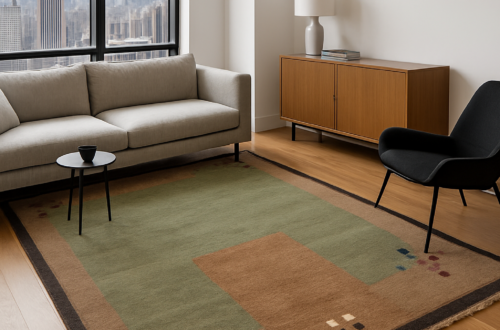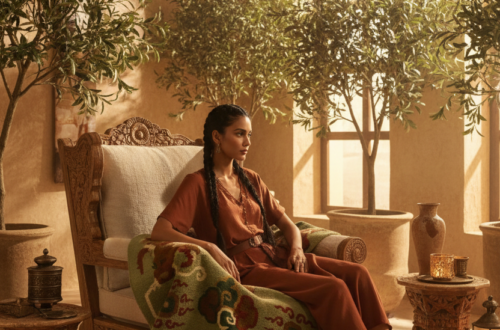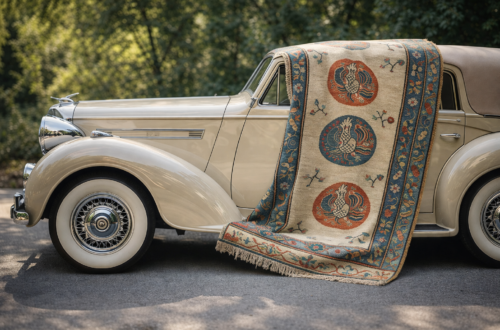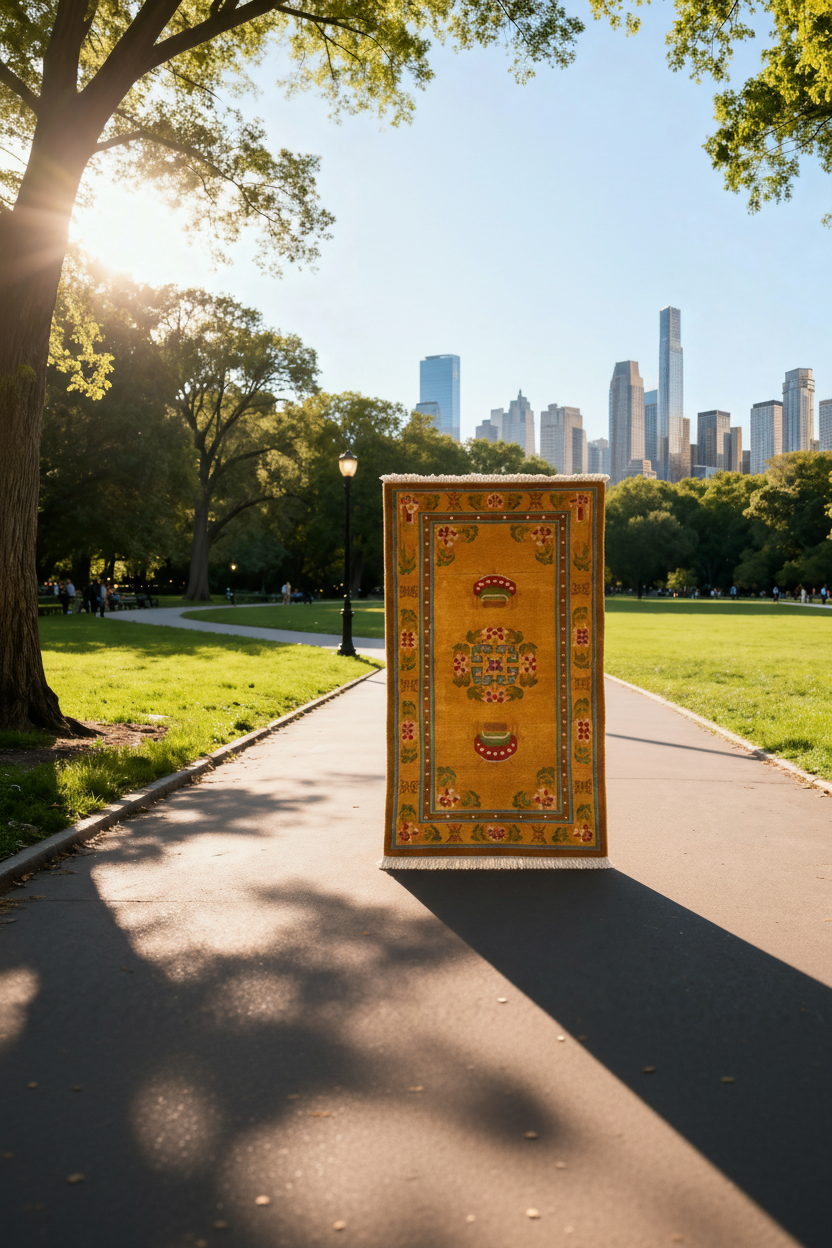
When you look at a hand-knotted rug, what do you see? A beautiful geometric pattern? A stunning combination of crimson and indigo?
To the artisans who weave them, a rug is not just a piece of floor covering—it is a blank page. For centuries, weavers across the Eastern hemisphere have used their looms to write poetry, record history, and cast protective spells. Every diamond, flower, and jagged line is a word in a deeply complex, woven language.
If you know what to look for, you can literally “read” a rug. Here is a guide to deciphering the ancient symbols woven into pieces from three of the world’s most legendary rug-making regions: Anatolia, Persia, and Kashmir.
1. Anatolia (Turkey): The Nomadic Voice
Anatolian rugs (often called Turkish rugs or Kilims) have deep tribal and nomadic roots. Because these weavers lived in the rugged mountains and harsh steppes, their motifs are highly geometric and deeply personal, focusing on survival, nature, and the desire for protection.
- Elibelinde (Hands on Hips): This is perhaps the most famous Anatolian motif. It looks like a stylized geometric woman resting her hands on her hips. It is a powerful symbol of motherhood, fertility, and the divine feminine.
- The Amulet and Evil Eye (Muska and Nazar): Nomadic life was dangerous, so weavers frequently included small triangular amulets or diamond-shaped “eyes” in the borders of their rugs. These were woven as literal talismans to deflect bad luck and protect the owner’s tent from the evil eye.
- The Scorpion (Akrep): You will often see jagged, crab-like shapes on the outer edges of an Anatolian rug. In tribal folklore, weaving a venomous creature into a rug was believed to protect the weaver and her family from real scorpions creeping into their homes at night.
2. Persia (Iran): The Imperial Garden
While Anatolian rugs are tribal and geometric, Persian rugs are famously fluid, floral, and regal. Historically woven in massive city workshops under the patronage of Shahs and emperors, Persian motifs are deeply tied to Islamic art, poetry, and the concept of a paradise garden.
- The Boteh (The Seed/Flame): You probably know this shape as “paisley.” In Persian rugs, this teardrop motif represents a universe of concepts depending on who you ask: a pinecone, a teardrop, a flame, or a sprouting seed. Ultimately, it is the ultimate symbol of life, eternity, and the universe.
- The Tree of Life: This unmistakable motif features a large, branching tree that spans the entire length of the rug. It represents the connection between the underworld (the roots), the earthly realm (the trunk), and the divine heavens (the branches reaching upward).
- The Central Medallion: Most classic Persian rugs feature a massive, intricate circle or diamond in the absolute center. This often represents the all-seeing eye of the Divine, the sun, or the dome of a mosque. The surrounding patterns are usually designed to look like a garden blooming outward from this divine center.
3. Kashmir (India): Paradise on Earth
Kashmir sits at the crossroads of the Silk Road. Because of this, Kashmiri weavers historically adopted many structural techniques from Persia, but they infused them with the breathtaking, specific natural beauty of the Kashmir Valley. Kashmiri rugs are heavily inspired by the region’s lush geography.
- The Chinar Leaf: The Chinar (the Oriental Plane tree) is the majestic symbol of Kashmir. Its distinct, star-shaped, five-pointed leaves are woven into borders and medallions. It represents majesty, longevity, and the deep shade and comfort the tree provides during the Kashmiri summers.
- The Lotus: Thriving in the famous Dal Lake of Srinagar, the lotus flower is a recurring motif in Kashmiri silk rugs. Because a lotus grows out of muddy waters to produce a flawless blossom, it represents purity, rebirth, and spiritual enlightenment.
- The Millefleur (Thousand Flowers): Kashmiri artisans are famous for their incredibly tight knot counts, allowing them to weave wildly intricate, hyper-realistic floral patterns. A rug filled edge-to-edge with tiny, distinct flowers isn’t just a garden—it is a literal woven map of the Himalayan spring.
The Story Under Your Feet
The next time you are shopping for a vintage or handmade rug, look closely at the borders and the center medallion. Are there scorpions guarding the edges? Is there a Tree of Life reaching toward the ceiling?
When you buy a hand-knotted rug, you aren’t just decorating a room. You are giving a home to a story that took someone’s hands months to tell.