Investing in a hand-knotted Kashmiri, Persian, or Anatolian rug is a major design milestone. But let’s be honest: city living is not exactly a museum environment.
Between open windows letting in urban dust, narrow apartment layouts forcing heavy foot traffic, and the inevitable spilled morning coffee, keeping a luxury rug looking pristine might sound stressful. However, these rugs were historically woven to survive nomadic tents and centuries of use. They are incredibly resilient if you know how to treat them.
Here is your straightforward survival guide to caring for a hand-knotted rug in a busy city apartment.
1. Master the Vacuum (But Ditch the Beater Bar)
City air is notoriously dusty, and dirt is a rug’s worst enemy. When microscopic grit gets trapped at the base of the knots, it acts like sandpaper, slowly slicing the wool or silk fibers every time you walk on it.
- The Rule: You must vacuum regularly, but you must turn off the rotating brush (the beater bar).
- The Technique: Use the suction-only setting or a hardwood floor attachment. The spinning bristles of a modern vacuum will brutally shred the hand-spun fibers and completely destroy the delicate fringe.
- The Direction: Always vacuum horizontally (side-to-side) across the width of the rug, rather than vertically, to avoid accidentally sucking up and snapping the fringe.
2. The “Immediate Blot” Protocol for Spills
City life moves fast, and spills happen. Whether it is a splash of red wine or a pet accident, how you react in the first ten seconds determines the fate of the rug.
- Never Rub: Rubbing aggressively forces the liquid deeper into the dense knots and distorts the pile.
- The Blot: Immediately press a clean, undyed white cotton towel directly onto the spill to absorb the moisture. Stand on the towel if you need extra pressure.
- Skip the Chemicals: Never use standard drugstore carpet foams or heavy chemical spot cleaners (like Resolve). Hand-knotted rugs often use natural vegetable dyes, and harsh chemicals will instantly bleach a permanent white spot into your beautiful vintage pattern. Stick to water, club soda, or a heavily diluted mix of white vinegar and water.
3. Rotate for the “Apartment Highway”
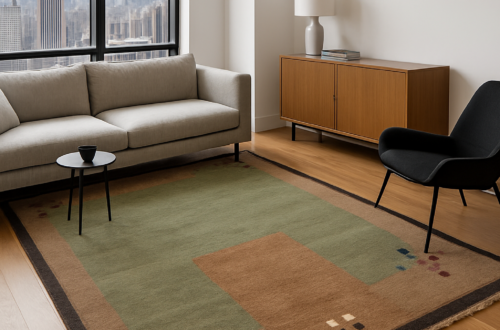
Unlike large suburban houses, city apartments usually have very specific, narrow traffic patterns—like the direct path from the front door to the sofa, or the kitchen to the dining table.
- The Fix: If you leave a rug in the exact same position for years, that “highway” will wear down significantly faster than the sections hiding under your furniture.
- The Schedule: Rotate your rug 180 degrees every six to twelve months. This ensures the pile wears evenly and prevents one side from becoming permanently faded by the sun streaming through your apartment windows.
4. The Unsung Hero: A Quality Rug Pad
If you are living in an apartment, a high-quality rug pad is absolutely non-negotiable for three distinct reasons:
- Soundproofing: A thick felt pad acts as a powerful acoustic buffer, saving your downstairs neighbors from hearing your heavy footsteps.
- Friction Protection: City apartments often have hard concrete or wood floors. A pad prevents the rough underside of the knots from grinding directly against the hard floor, effectively doubling the lifespan of your rug.
- Slip Prevention: It anchors the rug safely in place, stopping the corners from curling up and creating a tripping hazard in tight spaces.
5. Know When to Call the Pros
A hand-knotted rug is not a bathmat; you cannot throw it in the washing machine, and you should never have it steam-cleaned. Steam cleaning melts the natural protective lanolin oils found in sheep’s wool.
- The Timeline: Every three to five years, send the rug out to a professional who specializes in immersion washing for hand-knotted carpets. They will safely dust, wash, and dry the rug using traditional methods to bring the colors back to life.
A handmade rug is meant to be lived on, walked across, and enjoyed daily. By keeping the grit out and handling spills quickly, your rug will easily survive the city and outlast every other piece of furniture in your apartment.